Macon and Bibb County
Water damage repair in Macon. Reach a local provider.
One free call connects you with an independent local water damage restoration provider serving Macon and Bibb County. You say where the water is, then deal with that provider directly.
Free to call. No obligation to hire anyone.
- Connects you with independent local providers
- Burst pipes, leaks and soaked ceilings
- Flooded basements and crawl spaces
- Sewage backups and mold after water
Local conditions
Water in Macon by the numbers
Four figures from public sources that explain why water damage in Macon, Georgia looks the way it does.
- 18 feetFlood stage on the Ocmulgee River at Macon, set by the National Weather Service at the 5th Street Bridge gauge. The gauge’s crest history lists at least eight crests at or above it in 2024 alone.
- 46.91 inches of rain a yearThe 1991 to 2020 normal at the Macon airport. July is the wettest month at 4.79 inches, and about 14 days a year bring an inch or more.
- Median year built: 1977The Census Bureau’s 2024 survey counts 71,955 housing units in Bibb County. About 55 percent were built before 1980 and about 28 percent before 1960.
- 112 PSIThe average water pressure the Macon Water Authority says it pumps to customers. The Authority suggests a pressure-reducing valve for homes concerned about high pressure.

What you can call about
Which water problem do you have?
Each page explains one problem and the Macon facts that go with it. Or skip the reading, call, and describe what you are seeing to a local provider.
Emergency water removal
Standing water right now: the first ten minutes and who to call.
Flood cleanup
Water from outside, from street runoff to the Ocmulgee past 18 feet.
Burst pipe water damage
Split supply lines, including after freezes like 13 degrees in December 2022.
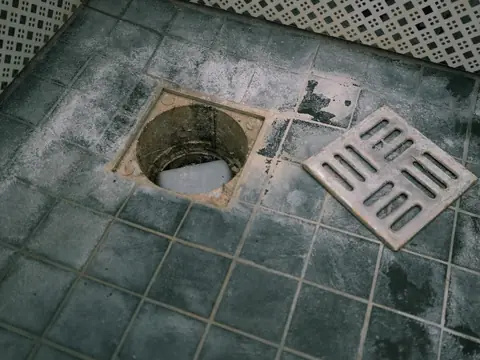
Sewage cleanup
Drain and toilet backups; the sewer lateral is the owner’s to repair.
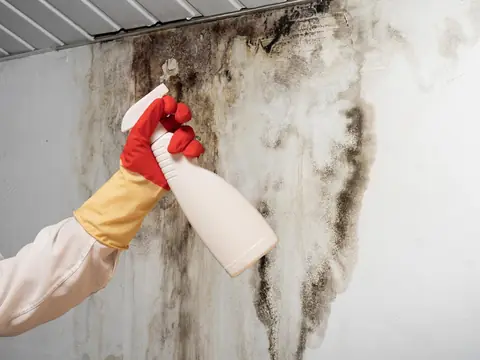
Mold remediation
Musty smell or growth; Macon mornings average 86 percent relative humidity over the year.
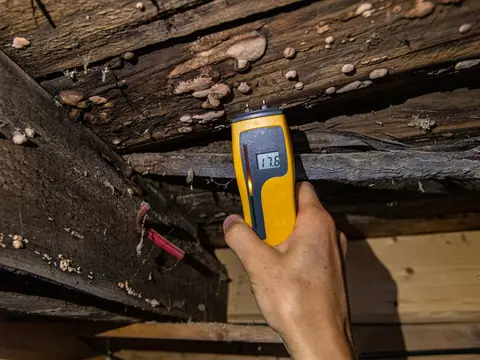
Water mitigation
The water is out but the house is still wet.


How it works
From water on the floor to a provider on the phone
- Call the numberThe call is free. It helps to have your ZIP code or neighborhood ready, and to know whether the water is still running and whether the power is on.
- Say what you seeTell the provider where the water is, where it came from if you know, and how long it has been there. Who answers depends on which independent providers are taking calls at that hour.
- Decide for yourselfThe provider arranges any visit and prices the work. The quote, the contract and the choice to hire are between you and that provider, and there is no obligation to go ahead.
First steps
The first hour with water in the house
Water Damage Repair Macon is a free referral service that connects homeowners and businesses by phone with independent local water damage restoration providers. It is not a contractor: it does not do the work, set prices or guarantee anyone’s work. What this page offers instead is plain explanation, Macon facts checked against public sources, and a call that costs nothing. The about page explains how this free service works.
If water is on the floor right now, the order below is the one public safety guidance supports. None of it needs a tool.
- Stop the water. Close the valve at the fixture, or the main shut-off. Consumer Reports says the main valve is usually at the water meter or where the main line enters the house, and the Macon Water Authority says a private shut-off valve belongs on the customer’s side of the meter.
- Think about power before you step anywhere. The CDC says to switch off the main only if the panel can be reached from a dry place, and never to switch power on or off while standing in water. If reaching the panel means stepping into standing water, its advice is to call an electrician.
- Photograph everything before you move it. The joint federal mold guide puts contacting the insurance company and photographing the home and belongings ahead of cleanup.
- Stay out of water from a drain, a toilet or outside. EPA’s advice for damage from sewage or other contaminated water is to bring in a professional with experience in it, not to treat it as a household job.
Water in the street is a different call
A water main break, a sanitary sewer overflow or a service interruption belongs to the Macon Water Authority, which lists its reporting line on its report a problem page. The Authority is responsible for the main in the street, the line from the main to the meter, and the meter box and its lid. Everything past the meter on your property is yours to maintain and repair.
The full first ten minutes, step by step, are on the page about emergency water removal in Macon.
Water still spreading? Call and tell the provider where it is and whether it is still running.
The repair
From wet to rebuilt: what water damage repair covers
Repair is the last stage of a longer job, and the stages run in a fixed order: stop the source, remove the water, dry the structure, take out what cannot be saved, then rebuild. Mitigation is the insurance word for the reasonable steps taken after a loss to stop further damage. Restoration is the wider job of drying the building and returning it to use, and repair is the drywall, flooring, ceiling and paint work that follows. The page on water mitigation in Macon explains the drying stage in full.
What stays and what goes depends first on the water. EPA’s table of materials that can be dried and kept applies only to clean water, not to sewage or polluted water. For clean water, public guidance reads like this.
| Material | What public guidance says | Source |
|---|---|---|
| Drywall | Dried in place only if it shows no obvious swelling and the seams are intact. Otherwise removed and replaced. | EPA |
| Fiberglass or cellulose insulation | Discarded and replaced, even after clean water. | EPA |
| Ceiling tiles | Discarded and replaced. | EPA |
| Carpet and backing | Can be saved if dried within 24 to 48 hours. The subfloor underneath is cleaned and dried either way. | EPA |
| Hardwood floors | Moisture removed at once, then dried with dehumidifiers, gentle heat and fans, with caution about heat. | EPA |
| Cabinets and vanities | Doors opened and drawers taken out, wiped clean and stacked to dry. | Joint federal mold guide |
Drying is finished against a target, not a calendar. A restorer sets a dry standard for each type of material and dries until meter readings reach it, so one room can be ready for rebuilding before another. EPA says water-damaged areas need to be dried within 24 to 48 hours to prevent mold growth, and notes that the mark is a guideline, not a guarantee either way. If growth has already started, see mold remediation in Macon.
Who does which part
The firm that dries a house and the firm that rebuilds it can be the same company or two different ones, so ask on the call which stages the provider handles. The trade standard for water damage work, the IICRC S500, says finding and correcting the cause of the water is the property owner’s responsibility and not the restorer’s. So ask as well whether fixing the leak itself is something the provider does or a job for a separate trade. In Georgia, plumbers, electricians and heating and air conditioning contractors must be licensed.
Call and ask the provider which parts of the job they take on, from drying through to the rebuild.
Macon conditions
How water behaves in Macon houses
Bibb County’s housing is not new. The Census Bureau’s 2024 American Community Survey gives a median year built of 1977, and 5,840 of the county’s homes date from 1939 or earlier.
Age changes how a house takes water. Historic Macon Foundation’s homeowner handbook says many Georgia houses stand on wooden sills resting on masonry piers, and that ground moisture rising into the piers and sills is one of the biggest dangers to them. The same handbook says historic interiors were finished in plaster on wooden lath, and that moisture getting in can make the plaster pull away from the lath. Plaster is also one of the slow-drying materials the trade standard puts in Class 4, its category for water held deep in materials such as plaster, wood, concrete and masonry.
Those houses cluster in the in-town districts: Vineville, along Vineville Avenue northwest of downtown, developed from about 1830 to 1935. Cherokee Heights was developed from 1909 to 1923, and Ingleside was begun in 1917. College Hill is known as the original residential area of the Macon Historic District. EPA also warns that older homes may contain asbestos or lead in their building materials, which matters before anyone opens a wall, ceiling or floor.
Downtown is a different problem. NewTown Macon counts more than 670 loft apartments there, and in a stacked building a leak on one floor becomes a ceiling repair for the unit below. No public source gives a share of Macon homes on basements, crawl spaces or slabs, so this page does not guess at one.
Where the water comes from
The Ocmulgee is gauged at the 5th Street Bridge, where the record crest is 35.4 feet on July 6, 1994, and the river reached 27.88 feet on September 29, 2024. Flood cleanup in Macon covers water that comes in from outside.
Cold is the other source. Macon averages about 44 days a year at 32 degrees or colder, and the airport recorded 13 degrees on December 24, 2022, 11 degrees on January 7, 2014 and 12 degrees the morning after the snow of January 21, 2025. The page on burst pipe water damage in Macon covers what follows a freeze. On the supply side, the Macon Water Authority has identified about 745 miles of aging cast iron water main.
This site covers Macon and Bibb County, from Downtown, Pleasant Hill and Shirley Hills to North Highlands, East Macon and Lizella. The Macon neighborhoods and service area page takes them one at a time.
Tell the provider the age of the house and what the walls and floors are made of when you call.
Permits
Permits and design review for the rebuild
The permit question arrives with the rebuild. Building permits in Macon are issued by Macon-Bibb County Building and Fire Safety, and its forms show how repair work is sorted.
The residential building permit application has a category for interior alterations and renovations of an existing dwelling and asks which trades the permit covers: electrical, low voltage, mechanical and plumbing. Stand-alone electrical, low-voltage, mechanical, plumbing or gas work goes on a single trade permit application, which is signed by the licensed cardholder. The forms warn that starting work before the permit is issued can bring a stop work order, a criminal citation or both, with penalties and fees. For permit applications from January 1, 2026, Macon-Bibb applies the 2024 International Residential, Building, Plumbing and Mechanical codes and the 2023 National Electrical Code, with Georgia amendments.
Houses in a design-review district
Macon-Bibb County has 17 National Register historic districts holding more than 6,000 historic buildings, by Historic Macon Foundation’s count. Listing on the National Register does not by itself regulate what an owner does to a historic house. A local design-review district can.
In one of those districts an owner needs a certificate of appropriateness before a work permit can be issued. Planning and Zoning staff first decide whether the proposed change is visible from the public right of way, and if it is, the application is scheduled for a Design Review Board meeting. So the question to settle early is whether any part of the repair, such as siding, windows or a porch, can be seen from the street.
What the county does not publish
No county page found in the research for this site states a dollar figure or a size at which a water damage repair needs a permit, so ask the permit office about your job before work starts. Georgia’s contractor licensing board also warns homeowners against pulling their own building permit for a job a contractor will do, because whoever obtains the permit takes on most of the liability.
Call to talk through the rebuild with a provider, and ask who will handle the permit.
Costs and insurance
Repair costs from published guides, and your policy
Water Damage Repair Macon is free to call and has no prices of its own. The provider you are connected with quotes after seeing the damage. The figures below are estimates published by cost guides, each with its date, and only the last is about Macon.
| What is priced | Published estimate | Source and date |
|---|---|---|
| Water damage restoration, national | $1,383 to $6,369, average $3,868 | HomeAdvisor, June 17, 2026 |
| Drywall repair, national | About $300 to $850 | HomeAdvisor, June 17, 2026 |
| Floor repair, national | About $200 to $550 | HomeAdvisor, June 17, 2026 |
| Ceiling repair, national | About $450 to $1,600 | HomeAdvisor, June 17, 2026 |
| Modelled restoration job, Macon | $2,134 to $2,255 | Homeyou, July 24, 2026 |
HomeAdvisor lists the repair stage separately from drying, so a quote that covers both will not match any single row. What moves a real number is the type of water, the area affected, how long it sat, the materials involved and whether the rebuild is included.
Your policy and a water claim
The NAIC describes the plumbing loss a homeowners policy pays for as a discharge that is both sudden and accidental. The Insurance Information Institute says a policy will not pay for damage due to lack of maintenance.
The Institute’s rule of thumb is that water from the top down, such as rainfall or a burst sprinkler, is generally covered, while water rising from the ground up is a flood policy matter. Georgia’s insurance commissioner tells homeowners that flood losses are not covered by a homeowners policy. The Institute also says sewer backups are not covered by a typical policy, a point sewage cleanup in Macon takes further.
The commissioner’s guide lists the policyholder’s duties after a loss: report the claim promptly, make reasonable repairs to stop further damage and keep receipts for labor and materials. A Georgia policyholder who cannot settle a dispute with an insurer can file a complaint with the Office of Commissioner of Insurance and Safety Fire, whose Consumer Services Division takes questions about claims. None of this means a given claim will be paid. Your policy and your insurer decide that.
Call to describe the damage to a local provider, and ask for a written quote to set beside these figures.
Before you hire
How to check the provider who comes out
The footer of this site says it is the homeowner’s responsibility to verify that a hired contractor has the license and insurance the work requires. Here is how that is done in Georgia.
Start with what the state licenses. Georgia’s definition of a residential contractor applies where the work is worth more than $2,500, and the Attorney General’s office says general contractors, electricians, plumbers, and heating and air conditioning contractors must be licensed through the Secretary of State’s office. None of the Georgia sources reviewed for this site names a state license specific to water damage restoration or mold remediation companies, and University of Georgia Extension says Georgia has no licensing requirement for mold professionals. What the state does license is the contracting, plumbing, electrical and conditioned-air work a restoration job can include, so ask which license covers the rebuild.
The Attorney General’s Consumer Ed site sets out how to verify a contractor license. The search takes four steps.
- Go to sos.ga.gov and choose Licensing.
- Click Licensee Search.
- Open the Building & Contractors tab and select Residential and General Contractors.
- Search by the contractor’s name or by license number.
Paper to ask for
The contractor licensing board’s consumer tips advise asking for proof of general liability insurance and checking that the name on it matches the licensed person or business. They also advise getting a written contract that sets out the work, the materials, the final clean-up, a completion date and a payment schedule, and never paying the whole cost of a project before the work is complete.
Warning signs from the Georgia Attorney General
The Attorney General warns against any contractor who asks for full payment up front, takes only cash or refuses to give a written contract. An offer to pay your insurance deductible can also be the sign of a scam.
If you rent, or the building is a business
Say at the start of the call whether you own the place, rent it or run a business from it. Whether a provider takes on work for a tenant or in a commercial building is that provider’s decision, and a tenant will usually need the owner involved before anything is opened up or rebuilt. The Georgia Department of Public Health tells renters that a rental property may fall under a local housing code, and to ask county or city officials whether one applies.
Call, speak with a local provider, and ask for the license number and insurance certificate before anything is signed.
Questions
Macon water damage repair questions
Is Water Damage Repair Macon a restoration company?
No. Water Damage Repair Macon is a referral service, not a contractor. It does not dry, clean, repair or inspect anything, employs no technicians and holds no contractor license. When you call the number on this site you are connected with an independent local water damage restoration provider. Any visit, quote, contract and payment is between you and that provider, and this site does not warrant or guarantee the work.
Does it cost anything to call, and am I obliged to hire anyone?
The call is free and there is no obligation to hire anyone. You describe the damage to an independent provider and decide for yourself whether to go further. This site sets no prices. Anything you agree to after the call, including the price of the work, is between you and the provider.
Who will actually come to my home, and how do I check their license and insurance?
An independent restoration provider, not an employee of this site. Georgia licenses general and residential contractors, plumbers, electricians and heating and air conditioning contractors, and a license can be looked up at sos.ga.gov under Licensing, then Licensee Search. No Georgia source reviewed for this site names a state license specific to water damage restoration. Ask for proof of general liability insurance in the business’s own name.
What should I do in the first hour after finding water damage?
Stop the water at the fixture or the main shut-off valve. Switch off the main power only if you can reach the panel from a dry place, which is the CDC’s advice, and never while standing in water. Photograph the damage before moving anything, then contact your insurer. Stay out of water that came from a drain, a toilet or outside.
What is the difference between water mitigation, restoration and repair?
Mitigation is the insurance word for the reasonable steps taken after a loss to stop further damage, such as shutting off the source, removing water and drying. Restoration is the wider job of returning the building and its contents to use. Repair is the rebuild at the end: drywall, flooring, ceilings and paint. One provider may do all three or only the first, so ask on the call.
How much does water damage repair cost in Macon, GA, and who sets the price?
The provider who sees the damage sets the price. This site sets none. As a reference, HomeAdvisor’s national estimate, updated June 17, 2026, is $1,383 to $6,369 with an average of $3,868. Homeyou’s modelled estimate for a Macon restoration job, updated July 24, 2026, is $2,134 to $2,255. The type of water, the area, the time it sat and the materials can move a real quote away from either figure.
Does homeowners insurance cover water damage in Georgia?
It depends on the cause and on your policy. The NAIC describes the covered plumbing loss as a discharge that is sudden and accidental, and the Insurance Information Institute says damage from lack of maintenance is not paid. Georgia’s insurance commissioner says flood losses are not covered by a homeowners policy. After a loss, report the claim promptly, make reasonable repairs to stop further damage and keep your receipts.
Can wet drywall, plaster or hardwood floors be saved, or do they have to be replaced?
Sometimes. EPA says drywall wet by clean water can be dried in place only if it shows no obvious swelling and its seams are intact, and that hardwood is dried with dehumidifiers, gentle heat and fans, with caution about heat. Plaster on wood lath, the traditional finish in historic houses, dries slowly and can pull away from the lath. EPA’s guidance on what can be kept applies only to clean water.
Do I need a permit to repair water damage in Macon-Bibb County?
It depends on the work. No county page reviewed for this site states a dollar or size trigger for water damage repairs, so ask Macon-Bibb County Building and Fire Safety before the rebuild starts. Its residential application has a category for interior alterations and renovations. In a local design-review district, an owner also needs a certificate of appropriateness before a work permit can be issued.
Does a water damage company need a license in Georgia?
Not one written for water damage work, as far as the Georgia sources reviewed for this site show: none names a state license specific to water damage restoration or mold remediation companies. The licenses that can apply belong to the trades inside the job. Georgia’s residential contractor definition covers work worth more than $2,500, and plumbers, electricians and heating and air conditioning contractors must be licensed. Ask which license covers the rebuild.
My house is in one of Macon’s design-review districts. Does that change the repair?
It can. In a local design-review district an owner needs a certificate of appropriateness before a work permit can be issued. Planning and Zoning staff first decide whether the change can be seen from the public right of way, and if it can, the application goes to a Design Review Board meeting. Listing on the National Register alone does not regulate what an owner does. Ask the Planning and Zoning office about your address.
Which parts of Macon are covered, and can I call at night?
The service takes calls about homes and businesses across Macon and Bibb County, including Downtown, Vineville, Ingleside, Pleasant Hill, East Macon and Lizella. Some participating providers offer 24/7 emergency service, but that depends on provider participation, location and demand, so availability at any given hour is not guaranteed. For any danger to life, call 911 first.
Water damage in Macon? Talk to a local provider.
One free call, no forms to fill in. You are connected with an independent local water damage restoration provider, and whether you hire them is your decision.